
Zuckerberg Apologized – Here Are Three Things Parents Should Do Now

Did you hear the news? At a U.S. Senate Hearing last week, Mark Zuckerberg apologized to families whose children suffered as a result of social media use.
As families held up photographs of their deceased children, Zuckerberg pledged to invest in greater safety efforts.
 So, will parents finally be able to rely on big tech companies to protect their children from abuse, exploitation, pornography, and other unwanted content?
Of course not.
We don’t ask our children to cook dinner without explaining how to safely operate an oven. We don’t even take them on a walk without instructing them to hold our hand, when they’re little, or to look both ways, when they’re old enough to walk alone.
We teach them how to protect themselves and others in all of these situations (and many more). Why? Because we love our children.
Using technology is no different. We can’t leave it up to big tech companies to protect our kids. It is up to us to protect them and teach them how to safely navigate life online.
Here are three tips to get started:
- Take an inventory of all technology devices.
You know what technologies your child has access to at home–tablets, phones, computers, and televisions–but do you know what technologies are available to them at school? Monitoring your child’s time spent online is impossible without first knowing all of the devices they use. Ensure proper safety apps and programs are downloaded on each device and that an appropriate amount of time is being spent on all of them, combined. - Make technology expectations clear.
As parents we hope that our children have a good head on their shoulders, but it’s unfair to have expectations for our children without ever directly expressing them. Talk to your child about your expectations for their behavior and time management while using technology. Be their best resource on how to appropriately use technology and keep conversations open so that both you and your child can bring up any concerns. - Know the potential harms associated with technology.
It’s easy to bury our heads in the sand and just accept technology as a way of life in the 21st century, but it’s up to parents to know the threats of on-line bullying, sexploitation, social contagions, drug sales, and more so that we can properly train and warn our children. We will never begin to form a battle plan if we can’t even identify the enemy.
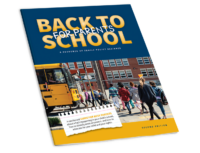 We know that the ever-changing nature of the internet makes it hard for parents to keep up with all of the threats facing our children. But there are resources available for parents who want to grow in their knowledge of how to protect their children, including our Back-to-School for Parents guide. Our free guide is designed to help parents like you be better prepared to protect and advocate for your children.
Tech companies may be feeling the demand for greater safety protocols online, but they are still driven by profits. Parents, alone, are driven by their child’s well-being. We look forward to partnering with you to protect them.
From one parent to another,

Robert Noland
Director, Marketing
P.S. – Keep an eye on your inbox! New resources to help parents better protect their children are under development. We can’t wait to share them with you.